
Bible Stories That Relate to Everyday Life
Each day when I wake up, I hear the same struggles from my kids: "I don't want to go to school tomorrow." "Nobody likes me." "Why does she get everything and I don't?" Maybe you hear similar words and sometimes you don't know what to say.
This topic "Bible stories that relate to everyday life" address every single one of these struggles through real people who may have had similar experience our children are feeling right now.
- Jealous of a sibling? We saw that in the story of Joseph and his brothers.
- Feeling too small to matter? That's the story of young David.
- Made a terrible choice and afraid to come home? That's the story of the prodigal son.
- Scared to speak up when something's wrong? That's Esther's story.
- Doesn't want to obey even though they know they should? Hello, Jonah.
The beautiful part? A story your child heard at age five means something completely different when they're actually facing that same situation at ten. That's when everything changes.
- What You'll Find in This Post
- Quick Summary Guide
- Bible Stories That Relate to Everyday Life
- 1. The Story of David and Goliath
- 2. The Prodigal Son
- 3. The Good Samaritan
- 4. Job: When Everything Goes Wrong
- 5. Ruth: What Real Friendship Looks Like
- 6. Esther: When You're Scared to Speak Up
- 7. Daniel in the Lion's Den: When Everyone Else Is Doing It
- 8. Joseph: When Someone Treats You Unfairly
- 9. Jonah: When You Really Don't Want to Obey
- 10. Loaves and Fishes: When What You Have Doesn't Feel Like Enough
- Download Free Cute Coloring Pages
What You'll Find in This Post

I've chosen ten Bible stories that speak directly to the everyday struggles kids face. Some are parables Jesus told. Others are about real historical people who messed up, got scared, felt jealous, or had to make hard choices just like our kids do.
Here's a quick summary guide for our Bible story for today.
Quick Summary Guide
- David and Goliath - When you feel too small or inadequate
- The Prodigal Son - When you make a big mistake and need forgiveness
- The Good Samaritan - When kindness feels hard or you don't like someone
- Job - When everything goes wrong and life feels unfair
- Ruth - Learning what real loyalty and friendship look like
- Esther - When you're scared to speak up or stand out
- Daniel in the Lion's Den - Facing peer pressure to do wrong
- Joseph - Dealing with jealousy and unfair treatment
- Jonah - When you don't want to obey
- Loaves and Fishes - When what you have doesn't feel like enough
Bible Stories That Relate to Everyday Life
1. The Story of David and Goliath
"Mom, I can't do the presentation in front of the class. Everyone will laugh at me."
The Story
David was a teenager, the youngest brother, just a shepherd. When the giant Goliath (over nine feet tall) challenged Israel's army, every soldier was terrified. For forty days, no one would fight him.
David showed up to bring food to his brothers and said, "I'll fight him."
Everyone laughed. King Saul said, "You're just a kid. He's been a warrior his whole life."
But David had fought lions and bears protecting his sheep. They tried to put armor on him, but he couldn't walk in it. So he grabbed five stones and his sling. That's what he knew how to use.
When Goliath saw him, he was insulted. "Am I a dog, that you come at me with sticks?"
David replied, "You come with sword and spear, but I come in the name of the Lord."
One stone. One shot. Goliath fell.
Scripture: 1 Samuel 17
The lesson: Being scared is a natural feeling, but with courage you become fearless. David couldn't wear the armor, so he used what he knew. You don't have to be the biggest or strongest. Use what you have. And remember, you're not facing your giant alone.
2. The Prodigal Son
Your child comes to you in tears. "I did something really bad. You're going to be so mad. I ruined everything."
The Story
A young man went to his father and demanded his inheritance early, which was basically like saying "I wish you were dead." The father gave it to him anyway.
The son took the money and left. He partied, made terrible choices, and wasted every penny. Eventually he ended up homeless and so desperate he was eating pig food just to survive.
He decided to go home, planning to beg his father to hire him as a servant. He didn't think he deserved to be called a son anymore.
But while he was still far down the road, his father saw him coming. And instead of waiting for an apology or an explanation, the father ran to him, threw his arms around him, and kissed him. Then he threw a party to celebrate: "My son was lost, but now he's found!"
Scripture: Luke 15:11-32
Key verse: "But while he was still a long way off, his father saw him and was filled with compassion for him; he ran to his son, threw his arms around him and kissed him." (Luke 15:20)
The lesson: No mistake is too big for forgiveness. The son wasted everything, and his father still welcomed him home. Love doesn't depend on being perfect. Coming home and admitting you were wrong takes real courage. Fresh starts are always possible.
Parent tip: Don't skip the older brother in this story. He was angry about the party. Perfect for talking about jealousy when siblings seem to get different treatment.
3. The Good Samaritan
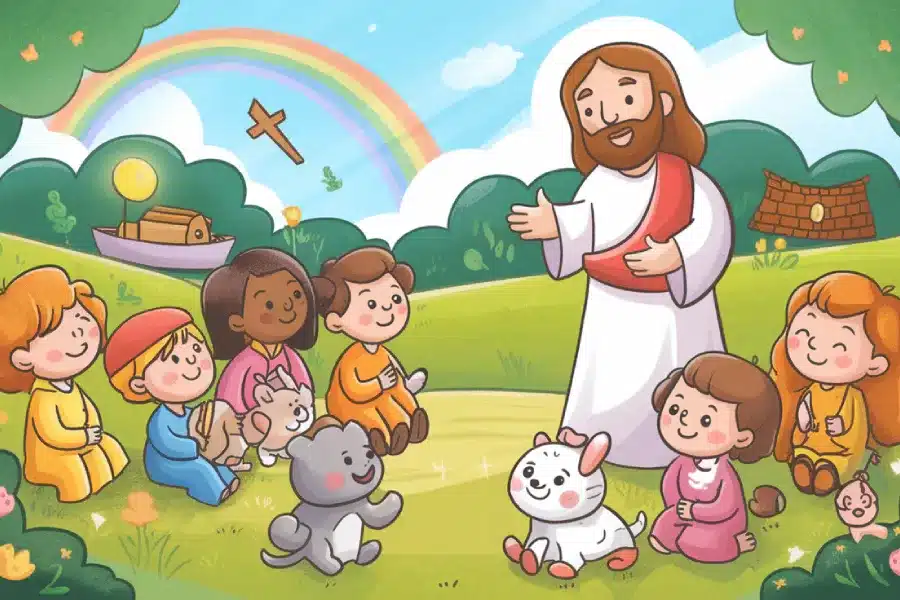
"But Mom, I don't LIKE them. Why do I have to be nice?"
The Story
A man was traveling when robbers attacked him, beat him up, stole everything, and left him bleeding on the side of the road.
A priest came walking by. He saw the man but crossed to the other side of the road and kept going.
Then a Levite (a religious leader) came by. He looked at the injured man, then also crossed to the other side and walked away.
Finally, a Samaritan came along. Now, this is important: Jews and Samaritans hated each other. They wouldn't even talk to each other. But when this Samaritan saw the hurt man, he stopped. He bandaged his wounds, put him on his own donkey, took him to an inn, and paid for his care.
Jesus asked: "Which of these three was a real neighbor?"
Scripture: Luke 10:25-37
Key verse: "But a Samaritan, as he traveled, came where the man was; and when he saw him, he took pity on him." (Luke 10:33)
The lesson: Kindness isn't just for people we like. The Samaritan helped someone who would normally hate him. Everyone deserves compassion, even if they've been unkind before. Actions matter more than intentions. The religious leaders probably had excuses. Small acts make a big difference.
4. Job: When Everything Goes Wrong
"Why is this happening to me? First I failed the test, then I got in trouble, and now my best friend is mad at me. It's not fair!"
The Story
Job was a good man who loved God and had a blessed life: a big family, wealth, health, everything. Then in a single day, he lost it all. His children died. His wealth was gone. His health failed. He sat in pain, covered in sores, scraping his skin with broken pottery.
His friends showed up, and instead of comforting him, they made it worse. They insisted he must have done something terrible to deserve this. "Good things happen to good people, bad things happen to bad people. So you must have sinned."
But Job hadn't done anything wrong.
Job questioned. He struggled. He asked "Why?" over and over. But he never stopped trusting that God was still there, even when everything felt dark and hopeless.
Eventually, God restored Job's life. But the story doesn't shy away from the reality: sometimes really bad things happen to really good people, and we don't always understand why.
Scripture: Book of Job (focus on chapters 1-2, 42)
Key verse: "Though he slay me, yet will I hope in him." (Job 13:15)
The lesson: Bad things happen to good people. It's not always your fault when life is hard. It's okay to ask "Why?" Job questioned God honestly, and that's not the same as losing faith. Friends don't always help the way we need them to. Hard times don't last forever, even when we can't see the end.
Important for parents: Don't minimize their pain with "Just trust God!" or "It could be worse!" Job's friends failed because they tried to explain instead of just being present. Sometimes our kids need us to sit with them in the struggle.
5. Ruth: What Real Friendship Looks Like
"My friend moved away and now I'm all alone." Or "Everyone has a best friend except me."
The Story
Ruth's husband died, leaving her with her mother-in-law Naomi. Naomi had also lost her husband and other son. She decided to return to her homeland and told Ruth to go back to her own people. It made sense. Ruth was young and could start over.
But Ruth refused. "Where you go, I will go. Where you stay, I will stay. Your people will be my people and your God my God."
Ruth gave up everything: her home, her family, her country, her chance at an easier life, all to take care of Naomi. She worked hard in the fields, gleaning leftover grain to provide for them both. She stayed humble and faithful.
Eventually, she married a good man named Boaz. And here's the beautiful part: Ruth became the great-grandmother of King David, which means she's in the direct family line of Jesus.
Scripture: Book of Ruth
Key verse: "Where you go I will go, and where you stay I will stay. Your people will be my people and your God my God." (Ruth 1:16)
The lesson: Real loyalty costs something. Ruth gave up her home, her people, her comfort. Kindness to family matters. Ruth didn't abandon her mother-in-law when things got hard. Hard work and faithfulness pay off. God sees your faithfulness even when no one else does. Ruth became part of the most important family in history.
6. Esther: When You're Scared to Speak Up
"I saw someone being mean, but I didn't say anything. I was too scared."
The Story
Esther was a Jewish girl who became queen of Persia. It sounds like a fairy tale, but her life was about to get complicated.
An evil official named Haman hated the Jews. He tricked the king into signing a law that would kill all Jewish people in the kingdom. Esther could have stayed quiet. No one knew she was Jewish. She could have saved herself.
But her cousin Mordecai sent her a message: "Don't think that just because you're in the palace, you'll escape. Who knows? Maybe you were made queen for such a time as this."
Here's the thing: going to the king without being invited could get you killed. Even if you were the queen. Esther was terrified. But she decided to go anyway.
She fasted and prayed for three days, then walked into the throne room. The king welcomed her. She exposed Haman's evil plan and saved her entire people.
Scripture: Book of Esther
Key verse: "And who knows but that you have come to your royal position for such a time as this?" (Esther 4:14)
The lesson: Courage isn't the absence of fear. Esther was terrified but went anyway. Your voice matters. One person speaking up can change everything. Sometimes you're in exactly the right place at the right time. "For such a time as this" means your situation might be your opportunity to make a difference. Doing the right thing might cost you something, but it's worth it.
7. Daniel in the Lion's Den: When Everyone Else Is Doing It
"But Mom, EVERYONE is doing it!" Whether it's bending the rules, excluding someone, or copying homework, peer pressure is real.
The Story
Daniel was a man of faith living in Persia. He prayed to God three times a day, every day, by his window where everyone could see him.
Some jealous officials didn't like Daniel's influence with the king. They couldn't find anything wrong with his work, so they came up with a plan. They convinced the king to pass a law: for thirty days, anyone who prayed to anyone except the king would be thrown into the den of lions.
The king signed it into law.
Daniel heard about it. And then he went home, opened his windows, and prayed to God, just like he always did. He didn't hide. He didn't make excuses. He didn't wait until the thirty days were over.
The officials caught him and dragged him before the king. The king didn't want to punish Daniel, but the law was the law. Daniel was thrown into the lions' den.
The next morning, the king rushed to the den and called out. Daniel answered: "My God sent his angel and shut the lions' mouths."
Not a scratch on him.
Scripture: Daniel 6
Key verse: "Now when Daniel learned that the decree had been published, he went home to his upstairs room where the windows opened toward Jerusalem. Three times a day he got down on his knees and prayed." (Daniel 6:10)
The lesson: Don't hide what you believe. Daniel prayed by his window. He didn't sneak around. Consequences don't change what's right. Even facing lions didn't make Daniel compromise. God protects those who stand firm, though that doesn't always mean nothing bad happens. Your choices influence others. The king was so impressed he made a new law honoring God.
8. Joseph: When Someone Treats You Unfairly
"It's not fair! My brother never gets in trouble, but I always do!" Or "They blamed ME even though I didn't do it!"
The Story
Joseph was his father's favorite son, and everyone knew it. His dad even gave him a special colorful coat. His older brothers were jealous and hated him for it.
One day, they'd had enough. They threw Joseph into a pit, then sold him as a slave to traders heading to Egypt. They took his coat, dipped it in animal blood, and told their father that Joseph was dead.
Joseph ended up as a slave in Egypt. He worked hard and gained his master's trust. Then his master's wife falsely accused him of assault. He was thrown into prison for something he didn't do.
But Joseph interpreted dreams for Pharaoh and impressed him so much that he became second-in-command of all Egypt. Years later, a famine hit. Joseph's brothers came to Egypt begging for food, not knowing who he was.
Joseph could have gotten revenge. Instead, he forgave them and saved his entire family.
Scripture: Genesis 37-50
Key verse: "You intended to harm me, but God intended it for good to accomplish what is now being done, the saving of many lives." (Genesis 50:20)
The lesson: Jealousy destroys relationships. Ask your kids: "Are you more like Joseph or his brothers right now?" Unfair treatment doesn't define your future. Joseph went from pit to prison to palace. Forgiveness is possible even after deep hurt. Joseph had every right to get revenge but chose mercy instead. God can use bad things for good. The brothers meant harm, but God used it to save thousands from starvation.
Important: Joseph's story took years to unfold. Help kids understand we don't always see God's plan right away.
9. Jonah: When You Really Don't Want to Obey
"Clean your room." "Later." "Do your homework." "In a minute." "Apologize to your sister." "But she started it!"
The Story
God told Jonah to go to the city of Nineveh and tell the people to stop being evil and turn back to God.
Jonah's response? "No way." He ran in the opposite direction and got on a boat headed as far from Nineveh as possible.
A massive storm hit. The sailors were terrified and threw Jonah overboard. A huge fish swallowed him, and he spent three days in its belly. Finally, Jonah agreed to obey.
The fish spit him out on the shore. Jonah went to Nineveh and delivered God's message. And you know what? The people actually listened. They changed their ways.
But here's the twist: Jonah was angry about it. He wanted them to be punished, not forgiven. He sat outside the city hoping to watch it burn.
Scripture: Book of Jonah
Key verse: "But Jonah ran away from the Lord and headed for Tarshish." (Jonah 1:3)
The lesson: You can't outrun God or consequences. Jonah tried and ended up in a fish. Delayed obedience is still disobedience. "In a minute" is often just "no" in slow motion. Our disobedience affects others. The sailors almost died because of Jonah's choice. God gives second chances, but Jonah's bitter attitude shows that obeying with resentment isn't really obedience at all.
10. Loaves and Fishes: When What You Have Doesn't Feel Like Enough
"Everyone else has better stuff than me." Or "I only have this little thing. It won't make a difference."
The Story
A huge crowd (5,000 men plus women and children) had been listening to Jesus teach all day. When it got late, everyone was hungry.
The disciples told Jesus to send everyone home to get food. Jesus said, "You feed them."
They panicked. "Feed them with what? We don't have anything!"
Then they found a boy in the crowd who had packed a lunch: five small loaves of bread and two fish. That was it.
The disciples brought the boy's lunch to Jesus. He took it, blessed it, and started breaking it into pieces. They distributed the food to the crowd.
Everyone ate until they were full. And when they gathered the leftovers, there were twelve baskets remaining. More than they started with.
Scripture: Matthew 14:13-21, John 6:1-14
Key verse: "Here is a boy with five small barley loaves and two small fish, but how far will they go among so many?" (John 6:9)
The lesson: What you have matters. Five loaves seemed tiny, but it was enough in Jesus's hands. God multiplies what we give, but the boy had to offer it first. Don't compare your contribution to others'. Nobody else had food to share, just this one boy. Small acts can have huge impact. One lunch fed thousands.
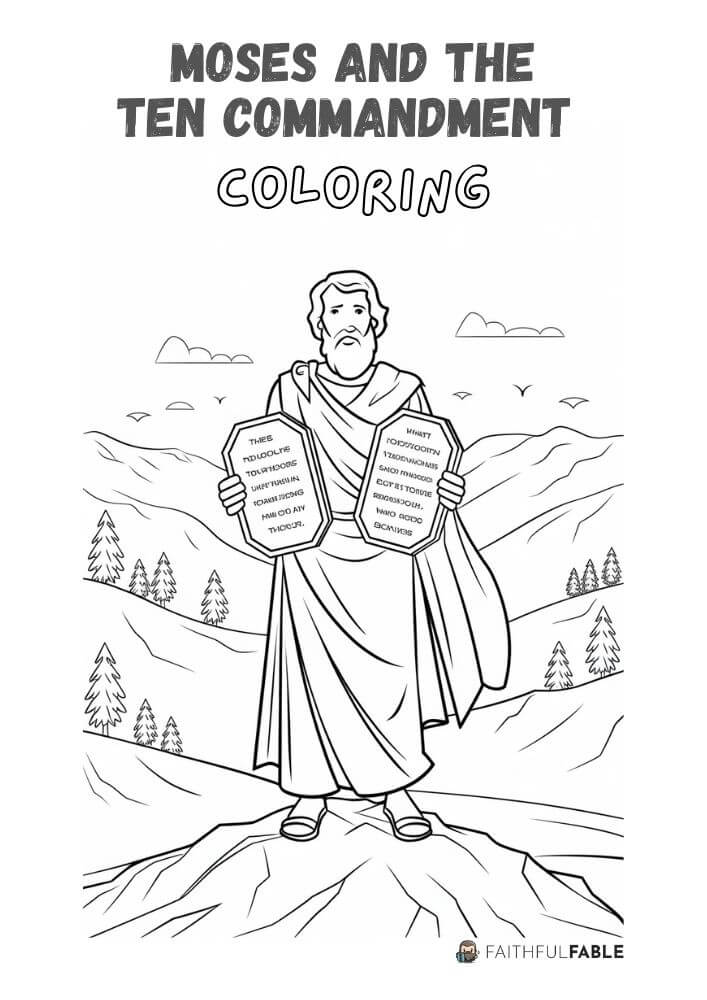
Download Free Cute Coloring Pages



Leave a Reply
Related Posts