
Story of Elijah and the Ravens To Teach Your kids
Quick Summary: The story of Elijah and the ravens (1 Kings 17:1-7) teaches children about God's faithful provision during difficult and uncertain times. When the prophet Elijah faced a severe drought, God sent ravens to bring him food twice daily at the Brook Cherith. This biblical account demonstrates that God provides for His people in unexpected ways, encourages trust during hardship, and shows that obedience brings divine care. Parents, you can use this event to help children understand faith, patience, and God's creative solutions to problems.
A child once asked me why would birds bring food to a man, I wasn't quite sure how to explain it. But that question opened up one of the most meaningful conversations about faith, and it all started with the story of Elijah and the ravens.
- How The Story of Elijah and the Ravens Began
- Lessons from Elijah being fed by Ravens
- 7 Powerful Lessons from Elijah Being Fed by Ravens
- 1. God's Provision Comes in Unexpected Ways
- 2. Obedience Precedes Provision
- 3. Daily Dependence Builds Stronger Faith
- 4. God Uses the Unholy to Accomplish Holy Purposes
- 5. Isolation Doesn't Mean Abandonment
- 6. God's Timing Is Sovereign and Perfect
- 7. Faith Means Trusting the Process, Not Just the Outcome
- Practical Ways to Apply These Lessons Today
- Questions for Reflection
- How I Use This Story with Different Ages
How The Story of Elijah and the Ravens Began

Elijah lived during one of Israel's darkest periods. King Ahab had led the nation into worshiping false gods, and the people had turned their backs on God who had rescued them from Egypt. As a prophet, Elijah had to deliver an unpopular message: there would be no rain until he said so.
After delivering this message to king Ahab, God told Elijah to hide by a small brook called Cherith, east of the Jordan River. This wasn't a vacation spot. He was sent there to be prepared for a greater task.
Then God said, "I have commanded the ravens to feed you there."
Its interesting that God choose to use Ravens. Not angels. Not a caravan of merchants. Not even friendly villagers. These birds were considered unclean according to Leviticus 11:13-15 - "And these you shall detest among the birds;[a] they shall not be eaten; they are detestable: the eagle,[b] the bearded vulture, the black vulture, the kite, the falcon of any kind, every raven of any kind." Remember, ravens are known for scavenging and taking food rather than delivering it.
Lets continue.
Every morning and evening, these ravens came. They brought bread and meat. Day after day, while the land dried up around him and people throughout Israel were rationing their last supplies, Elijah ate meals delivered from God. He drank from the brook until it dried up, since there was no rain in the land.
This story is actually the first part of a remarkable sequence during a severe drought. After God provided for Elijah through the ravens, the brook dried up, and God sent him to a widow in Zarephath, where the miracles continued in an even more powerful way.
Lessons from Elijah being fed by Ravens
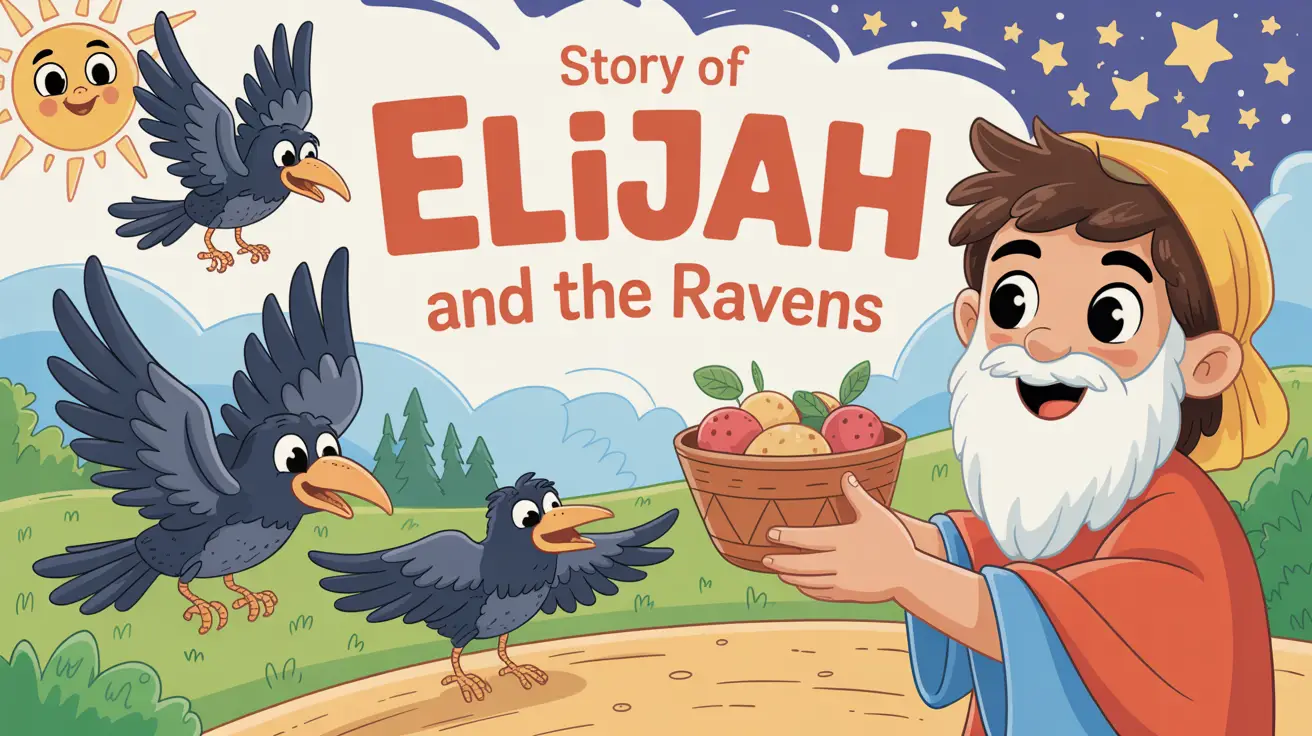
7 Powerful Lessons from Elijah Being Fed by Ravens
1. God's Provision Comes in Unexpected Ways
When God told Elijah He had "commanded the ravens" to feed him, it defied all logic. Ravens were scavengers, considered unclean birds under Jewish law. They took food, they didn't deliver it. Yet God chose the most unlikely messengers to sustain His prophet.
2. Obedience Precedes Provision
Elijah had to go to the Brook Cherith before he received provision. He had to obey God's instruction to hide in a place with no visible food source. The ravens didn't come to him at the king's palace or in a comfortable city - they came where God sent him.
3. Daily Dependence Builds Stronger Faith
The ravens came twice daily—morning and evening. Not weekly with a week's supply, not monthly with stockpiled resources. Every single day, Elijah had to trust that the birds would return. He couldn't hoard or plan ahead beyond that day.
4. God Uses the Unholy to Accomplish Holy Purposes
Ravens were unclean birds according to Leviticus 11:13-15. For a devout prophet like Elijah, receiving food from these birds would have seemed spiritually questionable. Yet God specifically chose them.
5. Isolation Doesn't Mean Abandonment
Elijah was completely alone at the Brook Cherith. No community, no support system, no human contact. In that isolation, God proved He was enough. The very birds of the air became Elijah's servants.
6. God's Timing Is Sovereign and Perfect
The ravens came every morning and evening like clockwork. Not randomly. Not sporadically. At the exact times Elijah needed nourishment. God's provision was punctual, reliable, and perfectly timed.
7. Faith Means Trusting the Process, Not Just the Outcome
Elijah didn't know how long he would be at the brook. He didn't know when the drought would end or what would happen next. He simply lived each day, drinking from the brook and receiving food from the ravens, trusting God's larger plan.
Practical Ways to Apply These Lessons Today
- Keep a "Raven Journal" - Record unexpected ways God provides for you. Over time, you'll see patterns of His faithfulness.
- Practice Daily Gratitude - Thank God specifically for today's provision before asking for tomorrow's needs.
- Embrace Uncomfortable Obedience - When God leads you to a difficult place, trust that provision will meet you there.
- Look for Unlikely Helpers - Be open to receiving help from unexpected sources without judging the messenger.
- Teach Children These Principles - Use this story to help kids understand that God cares for them in creative ways.
- Trust in Seasons of Isolation - When you feel alone, remember that God can sustain you even without human support.
- Release Control of "How" - Stop trying to figure out how God will provide and simply trust that He will.
Questions for Reflection
- Where is God asking you to obey before you see the provision?
- What "ravens" have you dismissed because they didn't look like the help you expected?
- Are you trying to stockpile provision rather than trusting God daily?
- How can you teach your children to recognize God's provision in their own lives?
- What season of isolation have you experienced where God proved faithful?
How I Use This Story with Different Ages
This story works beautifully for all ages. With younger children (3-6), I focus on the wonder of the ravens and how God uses surprising helpers. We make crafts and act it out with toy birds. Elementary kids (7-10) can handle more context about the drought and why provision was miraculous. Older children (11+) wrestle with deeper questions about God's character and faith during waiting periods, connecting it to other stories like Gideon's trust in God.

Leave a Reply
Related Posts